
ASTM A182 F6NM Charpy Impact Test: Requirements, Temperatures and Low-Temperature Limits
A practical reference for buyers and QA engineers who specify forged 13Cr-4Ni martensitic stainless steel (UNS S41500 / AISI 415).
Quick answer: ASTM A182 lists the mechanical properties for Grade F6NM but does not assign a Charpy value, so impact testing is carried out only when you request it, either through the specification's supplementary clause or through the code that governs the part. When it is required, F6NM is tested with a standard 10 × 10 × 55 mm V-notch specimen to ASTM E23, and a common acceptance criterion is an average of 42 J across three specimens with no single value below 34 J. The test temperature is not fixed; it follows the part's minimum design metal temperature (MDMT), which is frequently -40 °C or lower for cold-service applications.
What Is ASTM A182 Grade F6NM?
ASTM A182/A182M is the specification that covers forged stainless and alloy-steel flanges, fittings and valve parts for pressure service. Grade F6NM is its soft martensitic stainless steel, the same material often listed as UNS S41500 or AISI 415. It contains roughly 13% chromium, about 4% nickel and just under 1% molybdenum, with the carbon content held low at 0.05% maximum.
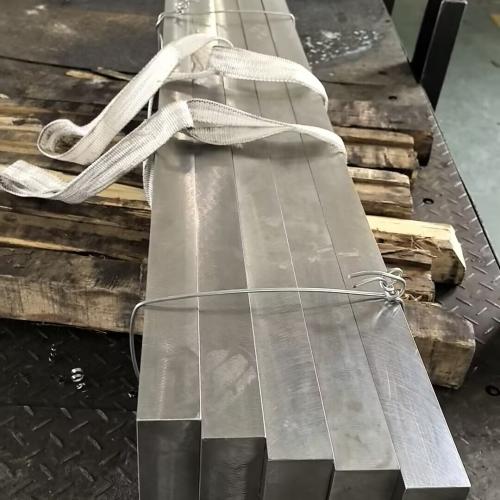
This composition is what sets F6NM apart from ordinary 410. The nickel addition and the low carbon give it a level of toughness and weldability that a plain 13Cr martensitic steel cannot reach, which is why it is widely used in oil and gas, hydropower and pressure-vessel applications, and why impact testing appears on almost every F6NM order. It is the standard choice for forged A182-F6NM rings, flanges and valve bodies that have to stay tough at low temperatures.
Does ASTM A182 Require Impact Testing for F6NM?
By itself, no. The mechanical-property table for F6NM specifies tensile strength, yield strength, elongation, reduction of area and a maximum hardness, but it does not include a Charpy value. A forging can therefore be fully certified to A182 without any impact testing at all.
Notch toughness becomes a requirement in one of two ways. You can invoke the supplementary impact-test clause within A182 on your order, or the code that governs the part can impose its own rules, such as ASME B31.3, ASME Section VIII, NACE MR0175/ISO 15156 or a client specification. Whichever one applies will define the test temperature and the acceptance energy.
The important point is that you have to specify it. If your drawing calls for impact-tested F6NM, state the test temperature and acceptance values on the purchase order. If you leave them out, you may receive a fully compliant forging that carries no impact data.
F6NM Charpy Impact Test Temperature
There is no single test temperature for F6NM. It is set by the minimum design metal temperature, which is the coldest temperature the metal will experience in service, including upset and depressurization conditions. The Charpy specimens are tested at that temperature, or below it, to confirm that the steel remains ductile.
The test temperatures most commonly specified for F6NM are shown below.
| Typical test temperature | Common application context |
|---|---|
| 0 °C / -18 °C (0 °F) | General piping and valves in moderate climates, per ASME B31.3 |
| -20 °C | Standard low-temperature oil and gas service |
| -40 °C (-40 °F) | Cold-climate wellheads, offshore and Arctic-rated equipment |
| -46 °C / -50 °C | LNG-adjacent and severe low-temperature service |
| -101 °C and below | Cryogenic applications (see the limits below) |
Because F6NM retains good toughness well below zero, it covers most of this range comfortably. That low-temperature capability is the main reason engineers choose it over 410.
F6NM Low-Temperature Rating and Cryogenic Service: -40, -60 and -196 °C
This question comes up constantly: can F6NM be used at -196 °C, and what is its rating at -60 °C? It is worth setting out the engineering reality clearly, because selecting the wrong grade for low-temperature service is a common cause of brittle fracture.
F6NM is a martensitic stainless steel, and like any steel with a martensitic structure it has a ductile-to-brittle transition temperature. Below that point its Charpy energy falls sharply. The low carbon content, the nickel addition and a properly controlled double temper push that transition far lower than it sits in 410, which is why F6NM is the preferred low-temperature martensitic grade. It does, however, have a practical limit.
| Charpy test temperature | What F6NM can do |
|---|---|
| -18 °C / -20 °C | Routine, with a wide margin. The mill data below shows 140 to 170 J. |
| -40 °C (-40 °F) | Routinely qualified for cold-climate, offshore and Arctic-rated parts. |
| -50 °C / -60 °C (-75 °F) | Met with controlled quench and double tempering, qualified to the specified minimum and verified on every heat lot. On a delivered cold-climate export project our F6NM round bars returned 202 / 175 / 202 J at -60 °C (-75 °F) with 100% shear. |
| -101 °C and below (including -196 °C) | Beyond the reliable range of any martensitic stainless. True cryogenic impact service requires austenitic (304/316L) or 9% nickel steel. |
A drawing that calls for impact-tested F6NM at -40 or -60 °C is therefore something we can produce and certify. A specification that requires guaranteed Charpy values at -196 °C is a different matter. At that temperature a 13Cr-4Ni steel is well below its transition point and cannot provide dependable toughness, regardless of heat treatment. It is also worth noting that some data sheets list F6NM as suitable "to -196 °C". This refers to the temperature at which the part can remain in service with its strength intact, not to passing an impact test at that temperature. Genuine cryogenic impact applications belong to austenitic stainless steel or 9% nickel steel.
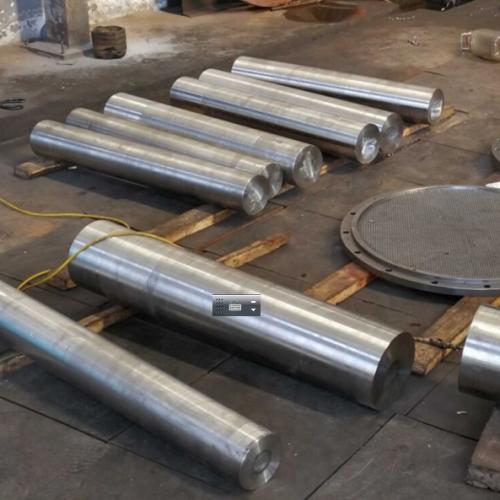
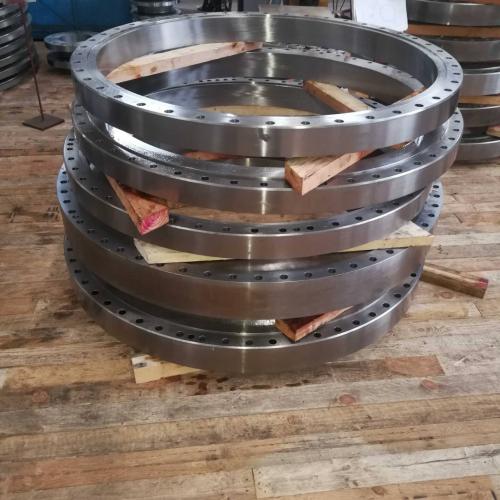
This is where our heat treatment makes the difference. With a controlled quench-and-double-temper cycle, we can supply forged F6NM (UNS S41500) parts qualified to the specified Charpy minimum at low temperatures, verified on every heat lot and supported by full test reports. At Jiangsu Liangyi Co., Limited, we have delivered impact-tested F6NM on demanding cold-climate export projects, including forged F6NM round bars for a Russian client tested at -60 °C (-75 °F) with results of 202 / 175 / 202 J and 100% shear, and F6NM seamless rolled rings for an Italian client. When a component genuinely requires -196 °C service, we recommend an austenitic or 9% nickel grade and supply it accordingly, so that a single source can cover your full temperature range.
F6NM Charpy Acceptance Criteria (Joules)
When impact testing is specified, acceptance is normally given as an average across three specimens together with a minimum allowable single value. The combination most often applied to F6NM is shown below.
| Criterion | Metric | Imperial |
|---|---|---|
| Average of 3 specimens (minimum) | 42 J | 31 ft-lbf |
| Minimum single specimen | 34 J | 25 ft-lbf |
Some codes and end users specify a different pair of values. An average of 27 J (20 ft-lbf), for example, is sometimes used for weld-zone qualification. The governing code or project specification always takes precedence, so the figures above should be treated as a typical mill default for the base material rather than a fixed ASTM requirement.
Charpy Specimen Size and Test Standard
Impact testing follows ASTM E23, or the equivalent ASME SA-370 and ISO 148-1. The reference specimen is the full-size Charpy V-notch bar, 10 × 10 × 55 mm, broken in a single pendulum blow with the absorbed energy reported in joules.
Where the section is too thin for a full-size bar, sub-size specimens of 7.5 mm or 5 mm are permitted, but the acceptance energy is reduced in proportion. This should be agreed before testing so that acceptable parts are not rejected on a technicality. Specimens are taken from prolongations or sacrificial test rings that have gone through the same quench-and-temper cycle as the production forging.
Why F6NM Performs Well at Low Temperatures
The toughness of F6NM comes from its heat treatment rather than from chance. After forging, the material is quenched and given a controlled double temper, which produces a microstructure of fine tempered martensite combined with a small fraction of stable reverted austenite. This austenite is the key to its performance: it blunts advancing cracks and lowers the ductile-to-brittle transition temperature well beyond what a 0.1% carbon martensitic steel could achieve.
The low carbon ceiling of 0.05% also helps, keeping the martensite soft and tough rather than hard and brittle, while the nickel depresses the transition temperature further. Together, these factors allow a well-treated F6NM forging to absorb well over 100 J at sub-zero temperatures, clearing typical acceptance limits with a comfortable margin, as the mill data below shows.
Real F6NM Charpy Results (Mill Certificate Data)
The table below is taken from an actual production mechanical-property report for forged A182 F6NM supplied to a power-plant project. It gives a realistic picture of what a properly heat-treated forging should deliver.
| Property | Requirement | Actual result (longitudinal) |
|---|---|---|
| Impact test temperature | -20 °C | -20 °C |
| Charpy V-notch energy (AkV) | ≥ 32 J | 156 / 146 / 173 J |
| Specimen | 10 × 10 × 55 mm | Full size |
| Tensile strength | ≥ 790 MPa | 900 MPa |
| Yield strength (Rp0.2) | ≥ 620 MPa | 835 MPa |
| Elongation | ≥ 15% | 16% |
| Reduction of area | ≥ 45% | 64% |
| Hardness | ≤ 295 HBW | 277 / 268 / 273 HBW |
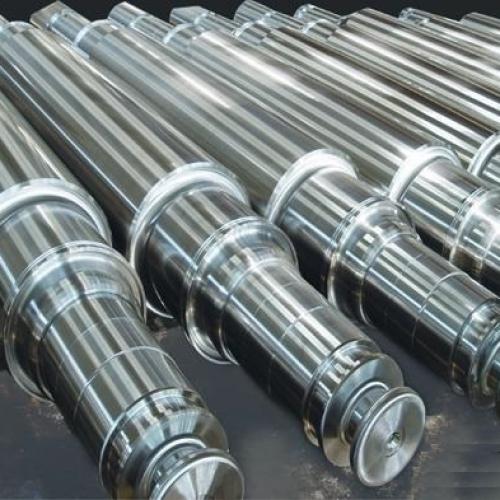
Charpy results four to five times the minimum are normal for F6NM that has been correctly quenched and double tempered. This is the same toughness that makes the grade a trusted choice for hydro turbine runners, valve bodies and subsea wellhead components.
How to Specify F6NM Impact Testing on Your Purchase Order
Including all four of the following on your order will help you avoid re-testing and rejected lots:
- Governing code or specification, for example ASME B31.3, NACE MR0175/ISO 15156 or a client specification.
- Test temperature, tied to the component MDMT (for example, -40 °C).
- Acceptance values, giving both the average and the minimum single value (for example, 42 J average and 34 J single).
- Specimen orientation and location, such as longitudinal or transverse, and the sampling depth (mid-wall, T/4, and so on).
Frequently Asked Questions
What temperature is the F6NM Charpy impact test done at?
It depends on the part's minimum design metal temperature. The most common values are -18 °C, -20 °C and -40 °C, with cryogenic work going lower. The test is run at, or below, the MDMT.
What is the minimum Charpy value for ASTM A182 F6NM?
A widely used acceptance is an average of 42 J (31 ft-lbf) across three specimens, with no single value below 34 J (25 ft-lbf). The binding figure comes from your governing code or purchase order, not from the base A182 table.
Is Charpy testing mandatory for F6NM under ASTM A182?
No. The base A182 mechanical table sets no Charpy value for F6NM. Impact testing is added by a supplementary clause or by the application code, so it must be specified on the order.
Can ASTM A182 F6NM be used for cryogenic -196 °C service?
Not for guaranteed impact toughness. F6NM is martensitic and has a ductile-to-brittle transition, so at -196 °C its notch toughness is not dependable. True -196 °C cryogenic impact service uses austenitic stainless steel (304/316L) or 9% nickel steel. F6NM is well suited to service down to about -40 to -60 °C with lot testing.
What is the low-temperature rating of F6NM for Charpy impact at -60 °C?
F6NM can be qualified at -60 °C (-75 °F) with controlled quench and double tempering, verified on each heat lot. On a delivered project our F6NM round bars returned 202 / 175 / 202 J at -60 °C with 100% shear fracture. Testing at -40 °C is routine and usually leaves a wide margin.
Can ASTM A182 F6NM meet Charpy impact requirements at -60 °C (-75 °F)?
Yes. With controlled quench and double tempering, F6NM can be qualified to the specified Charpy minimum at -60 °C (-75 °F), verified on each heat lot. On a delivered export project our F6NM round bars returned 202 / 175 / 202 J at -60 °C with 100% shear fracture. Below about -101 °C, however, a martensitic grade is no longer reliable and an austenitic or 9Ni steel should be used.
Is F6NM a cryogenic grade?
F6NM is a low-temperature martensitic grade, strong down to roughly -40 to -60 °C, but it is not a true cryogenic (-196 °C) grade. For cryogenic service, choose an austenitic or 9Ni steel.
Is F6NM better than 410 stainless for impact toughness?
Yes. Its nickel-molybdenum chemistry and lower carbon give it noticeably better notch toughness and weldability than plain 410, which is why it replaces 410 in low-temperature and sour-service applications.
Need Impact-Tested F6NM Forgings?
Jiangsu Liangyi Co., Limited supplies forged A182-F6NM / UNS S41500 / AISI 415 components, including rings, flanges, valve bodies, turbine runners and wellhead parts, with full mechanical and impact test reports to your specified MDMT for low-temperature service. Contact us at forgepieces.com, +86-510-86107550 or sales@forgepieces.com.