1.4923 (X22CrMoV12-1) Steel Equivalent Grades: ASTM, AISI, DIN & International Cross-Reference
Updated 21 June 2026 · Jiangsu Liangyi Co., Ltd.
1.4923 (EN name X22CrMoV12-1) is a 12% chromium martensitic creep-resisting steel used for steam- and gas-turbine blades, rotors, discs and high-temperature bolting up to about 600 °C. Engineers most often reach this page for one reason: they have a drawing that calls out one national designation and need to source the part under another. This guide gives the verified cross-reference — and, just as important, explains where the "equivalents" quietly differ.
Quick answer. The nearest equivalent of 1.4923 / X22CrMoV12-1 is ASTM A565 Grade 616 / AISI Type 422 / UNS S42200 in the United States, X22CrMoV12-1 (1.4923) in the EN/DIN system, Z21CDV12 in France and ≈ 1Cr12MoV in China (GB). It is frequently certified together with the closely related 1.4922 (X20CrMoV12-1). None is a 100% chemical match — AISI 422 carries roughly 1% tungsten that X22CrMoV12-1 does not.
1.4923 / X22CrMoV12-1 in the Grade System
Material number 1.4923 and chemical name X22CrMoV12-1 are two labels for one EN grade — a martensitic, heat-treatable steel alloyed with chromium, molybdenum, vanadium and nickel and classed as creep-resisting. Because every steelmaking nation developed its own 12Cr turbine steel under a different standard (ASTM/AISI in the US, GOST in Russia, GB in China, AFNOR in France), the same alloy appears under many names. There is no single international agreement that makes them interchangeable, which is exactly why a careful cross-reference matters when converting a specification.
The Short Answer: ASTM / AISI Equivalent of 1.4923
The most widely accepted American cross-reference for X22CrMoV12-1 is:
- ASTM A565 Grade 616 — the bar specification for high-temperature turbine bolting and blading steels;
- AISI Type 422 — the older AISI designation for the same family;
- UNS S42200 — the unified numbering reference.
These three describe one US grade and are the right starting point for converting a European drawing to an American supply chain. The caveat: AISI 422 is a 12Cr-Mo-V-W steel carrying about 0.75–1.25% tungsten, whereas 1.4923 has no specified tungsten. The tungsten raises high-temperature strength slightly and shifts tempering behaviour. For most blading and bolting duties the two perform interchangeably, but for a code-stamped or customer-specified part, match the actual EN grade rather than substitute 422 on the assumption the alloys are identical.
Full International Equivalent Cross-Reference
This table maps 1.4923 / X22CrMoV12-1 to the nearest national designations. Treat each as a nearest equivalent for sourcing, then confirm against the governing material certificate.
| Standard / Country | Designation | Notes |
|---|---|---|
| EN / Germany (DIN) | X22CrMoV12-1 · 1.4923 | Base grade (EN 10269 / EN 10302) |
| USA (ASTM / AISI / UNS) | ASTM A565 Gr 616 · AISI 422 · S42200 | Nearest; AISI 422 contains ~1% W |
| France (AFNOR) | Z21CDV12 · Z20CDV12-1 | Close composition match |
| China (GB) | ≈ 1Cr12MoV | Similar 12Cr-Mo-V martensitic |
| Russia (GOST) | ≈ 15Kh11MF (15Χ11ΜΦ) | Closest creep-resisting analogue |
| Czech (ČSN) | 17134 | Listed cross-reference |
| Related EN grades | 1.4922 (X20CrMoV12-1) · 1.4926 (X21CrMoV12-1) · 1.4913 (X19CrMoVNbN11-1) | Often co-certified; see comparison below |
National "equivalents" are matched on chemistry and intended use, not on a single international agreement. Always state the exact grade and delivery condition on the purchase order.
Why "Equivalent" Does Not Mean "Identical"
This is where most cross-reference lists fall short. Two grades can share the same headline description — "12% chromium creep-resisting turbine steel" — and still differ enough to matter:
- Tungsten: AISI 422 contains tungsten; X22CrMoV12-1 does not. This changes high-temperature strength and tempering response.
- Mo and V windows: small differences in the molybdenum and vanadium ranges shift creep-rupture behaviour over thousands of service hours.
- Heat-treatment condition: a "matching" grade delivered in the wrong +QT class will not meet your strength or toughness targets.
- Melting route: a vacuum-degassed or ESR (electroslag-remelted) ingot delivers cleaner, more homogeneous metal — critical for fatigue-loaded turbine blades.
For non-critical conversions, the nearest equivalent is a safe sourcing shortcut. For turbine blading, rotor and high-pressure bolting work, order the verified EN grade in the specified condition rather than a look-alike.
Composition Behind the Cross-Reference
Equivalence is judged mainly on chemistry, so the heat analysis of 1.4923 (per EN 10269 / EN 10302, wt%) is the reference point for every comparison above:
| Element | C | Si | Mn | P | S | Cr | Mo | Ni | V |
|---|---|---|---|---|---|---|---|---|---|
| Min | 0.18 | – | 0.40 | – | – | 11.0 | 0.80 | 0.30 | 0.25 |
| Max | 0.24 | 0.50 | 0.90 | 0.025 | 0.015 | 12.5 | 1.20 | 0.80 | 0.35 |
Choosing the Condition: +QT1 (QT800) vs +QT2 (QT900)
When you convert a grade you must also convert the condition. 1.4923 is supplied in two main quenched-and-tempered classes — +QT1 favours toughness, +QT2 favours strength:
| Property (room temp.) | +QT1 / QT800 | +QT2 / QT900 |
|---|---|---|
| Tensile strength Rm (MPa) | 800–950 | 900–1050 |
| Yield Rp0.2 (MPa) | ≥ 600 | ≥ 700 |
| Elongation A (%) | ≥ 14 | ≥ 11 |
| Reduction Z (%) | ≥ 40 | ≥ 35 |
| Impact KV (J) | ≥ 27 | ≥ 20 |
Full datasheet, physical properties and in-house heat-treatment / metallography records are on the X22CrMoV12-1 (1.4923) forgings page.
1.4923 vs 1.4922 (X20CrMoV12-1): What Is the Difference?
1.4923 (X22CrMoV12-1) and 1.4922 (X20CrMoV12-1) are very close cousins: same 12Cr-Mo-V design, overlapping service range, and in practice many mill certificates confirm both grades from a single melt. The main distinction is a marginally higher carbon target in 1.4923 (the "22" vs "20" in the names reflects ≈0.22% vs ≈0.20% C), which lifts attainable strength slightly. If a drawing calls out one grade, supply that grade — but do not be surprised to see both numbers on the same certificate.
Where These Grades Are Used
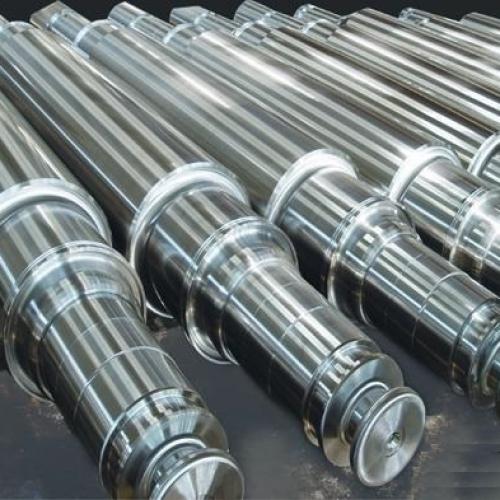
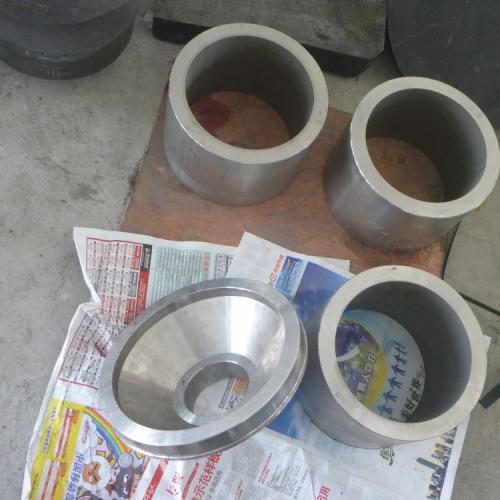
Across all its designations, this 12Cr creep-resisting steel does the same job: gas- and steam-turbine blades, vanes and blading bars; turbine rotors, wheels and discs; guide, seal and labyrinth rings; high-temperature valve spindles, stems and seats; and studs, bolts and fasteners for steam service. That shared application set is why a sound equivalent table is worth getting right.
How to Specify and Order X22CrMoV12-1 Forgings
To get the right part the first time, put four things on your enquiry:
- Grade and standard — e.g. "X22CrMoV12-1 / 1.4923 per EN 10269."
- Delivery condition — +QT1 (QT800) or +QT2 (QT900), and any +SR stress-relief requirement.
- Melting route — EF + LF + VD for standard cleanliness, or ESR for fatigue-critical turbine parts.
- Form and certification — bar, ring, disc, flat bar or near-net forging, with EN 10204-3.1 or 3.2 documentation.
Sourcing the verified EN grade?
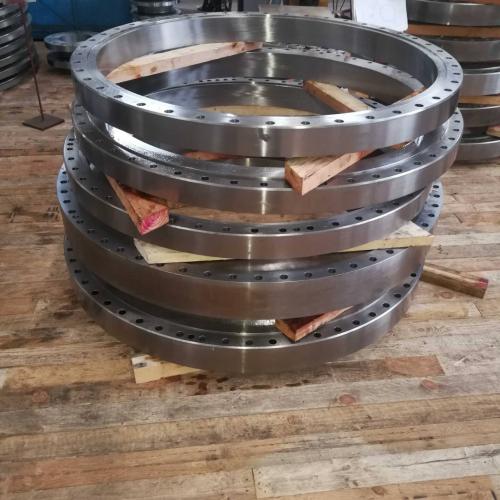
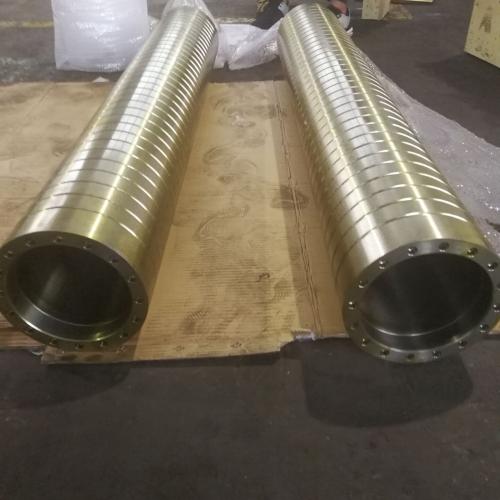
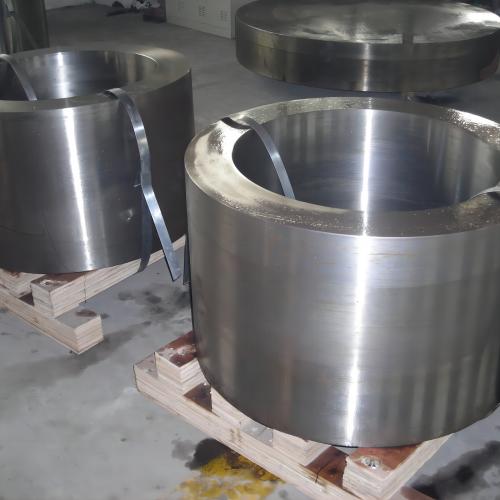
Jiangsu Liangyi forges 1.4923 / X22CrMoV12-1 to your drawing in the +QT1 / +QT2 condition (EF + LF + VD or ESR melting), up to Ø3 m, 25 t and 12 m, with EN 10204-3.1 / 3.2 certification (TÜV, DNV, BV, SGS). See full product details and capabilities on the X22CrMoV12-1 (1.4923) forgings & forged rings page →
Email sales@forgepieces.com · Phone +86-510-86107550
Frequently Asked Questions
What is the X22CrMoV12-1 ASTM equivalent?
The nearest ASTM specification is ASTM A565 Grade 616, corresponding to AISI Type 422 / UNS S42200. It is the closest US grade, though AISI 422 contains roughly 1% tungsten that 1.4923 does not, so it is a near — not exact — match.
Is 1.4923 the same as X22CrMoV12-1?
Yes. 1.4923 is the EN material number and X22CrMoV12-1 is the EN name for the same martensitic creep-resisting steel.
What is the AISI equivalent of 1.4923?
AISI Type 422. In modern specifications it is referenced as ASTM A565 Grade 616 (UNS S42200).
What is the maximum service temperature of 1.4923?
Scale-oxidation resistance holds to about 600 °C; practical continuous-service strength is generally rated to around 580 °C.
What is the difference between +QT1 and +QT2 for X22CrMoV12-1?
+QT1 (QT800) gives tensile strength 800–950 MPa with higher toughness; +QT2 (QT900) gives 900–1050 MPa with higher strength and proof stress (≥700 MPa).
Is X22CrMoV12-1 a stainless steel?
It is a martensitic stainless steel (about 12% Cr) classified primarily as a heat- and creep-resisting steel. Its corrosion resistance is limited because the chromium content sits at the low end of the stainless range.
Who manufactures X22CrMoV12-1 / 1.4923 forgings?
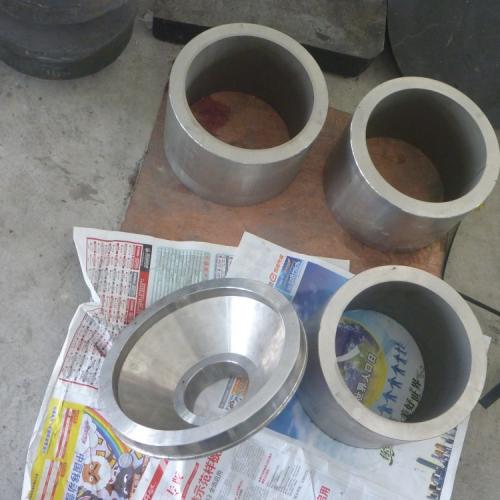
Jiangsu Liangyi Co., Ltd. is a China-based manufacturer of 1.4923 / X22CrMoV12-1 open-die forgings, including turbine-blade flat bars, round and square bars, seamless rolled rings and discs, supplied in the +QT1 / +QT2 condition with EN 10204-3.1 / 3.2 certification (TÜV, DNV, BV, SGS).